
Camelina has in the past been cultivated as an oilseed crop. It is used to produce vegetable oil and also as animal feed. It can also be used to produce biodiesel.
Crops
676 posts
Calamondin probably originates from China.
Fruits of calamondin can be eaten, but calamondin is also used as an ornamental plant.
Probably, Calamondin is a hybrid between Citrus reticulata (tangerine) and Citrus japonica (kumquat).
Button mangosteen is grown in Southeast Asia.
Button mangosteen is a rare fruit related to the purple mangosteen.
Names Scientific Cyclanthera pedataSynonym Momordica pedataEnglish Caigua Slipper gourdSpanish Achocha Caigua CaihuaGerman Inka-Gurke Taxonomy Order CucurbitalesFamily CucurbitaceaeGenus CyclantheraSpecies Cyclanthera pedata (Caigua) Crop categories Fruit vegetables Minor crops Subtropical crops Tropical crops Vegetables

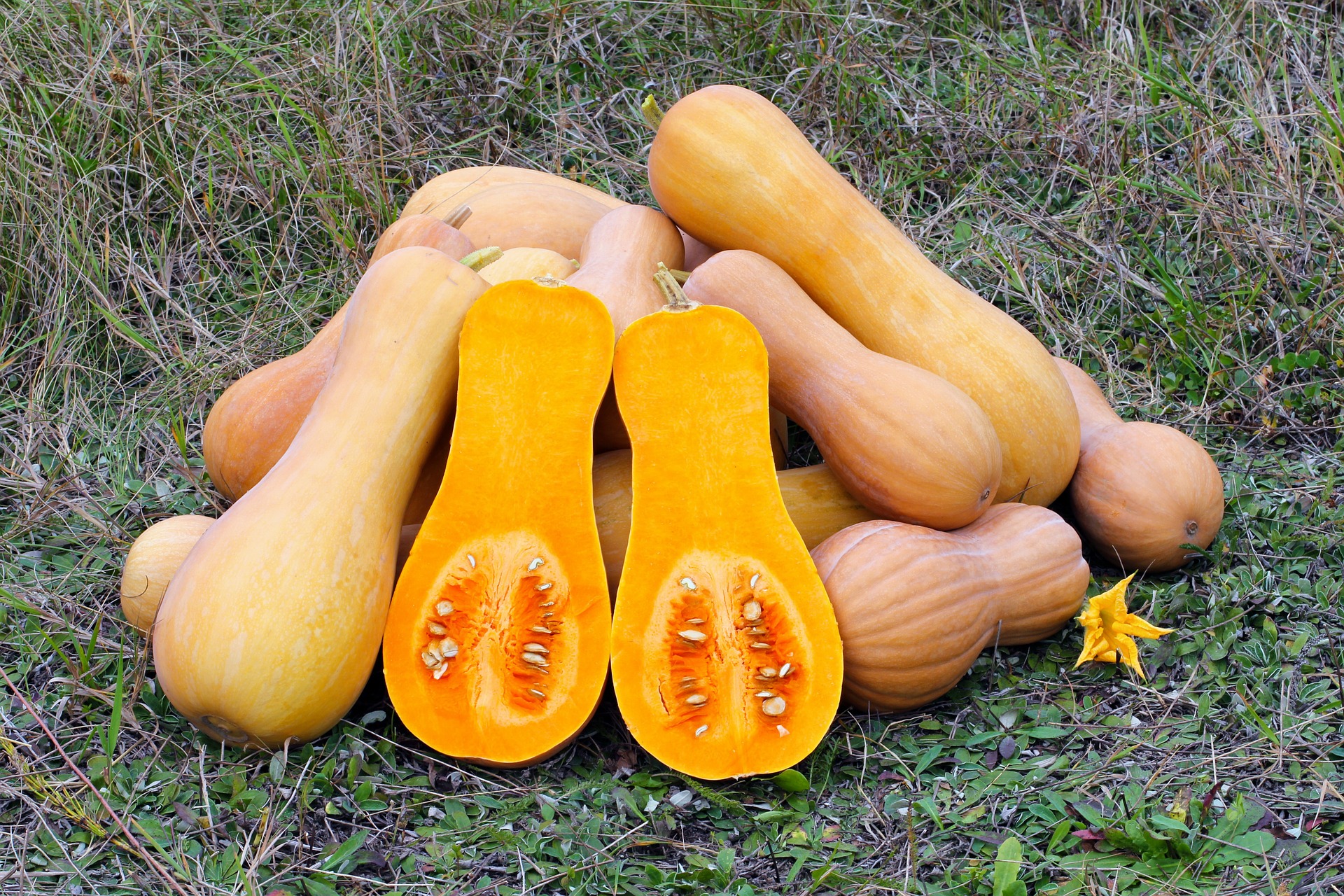
Buttercup squash is a type of squash with many different cultivated forms.
Different cultivars of this species have a lot of variety in size, color and shape and are often known with different names, such as Banana squash, Lakota squash and Hubbard squash.
Names Scientific Fagopyrum esculentumEnglish Buckwheat Common BuckwheatDutch BoekweitSpanish Alforfón Trigo sarracenoFrench Blé noir SarrasinGerman Echter Buchweizen Gemeiner BuchweizenItalian Grano saraceno Taxonomy Order CaryophyllalesFamily PolygonaceaeGenus FagopyrumSpecies Fagopyrum esculentum (Buckwheat) Crop categories Arid crops Cool temperate crops Mediterranean crops Minor crops Pseudocereals Subtropical crops Temperate crops

Names Scientific Vicia fabaEnglish Bell bean Broad bean Faba bean Fava bean Field bean Horse beanDutch Paardenboon Tuinboon VeldboonSpanish HabaFrench FèveGerman Ackerbohne Dicke Bohne Favabohne Saubohne SchweinsbohneItalian Fava Taxonomy Order FabalesFamily FabaceaeGenus ViciaSpecies Vicia faba (Broad bean) Crop categories Arid crops Cool temperate crops Forage and fodder crops Fruit vegetables Legumes Mediterranean crops Minor crops Podded vegetables Subtropical crops Temperate crops Vegetables
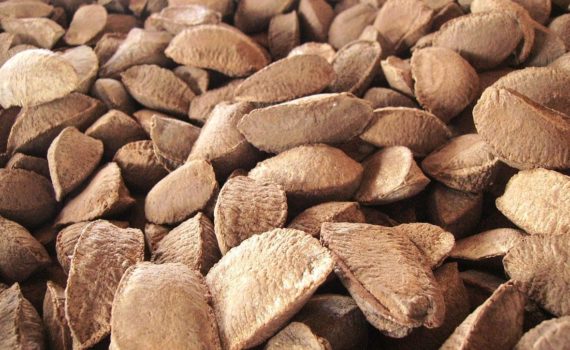
The Brazil nut is a large tree, which can reach 50 m tall. The trunk can be 1 to 2 m in diameter. It is one of the largest species of trees in the Amazonian rainforest.

The genus Vaccinium includes several edible fruits such as Blueberry, Bilberry, Cranberry, Whortleberry, Lingonberry, Cowberry and Huckleberry. They all grow in regions with a temperate climate.
The blue berries are edible.
Note that the name Honeyberry is also used for some different unrelated fruits.
Leaves of this Eucalyptus tree are distilled to produce eucalyptus oil, which is an essential oil. The wood of the tree is used as pulpwood (for paper production) and as fuelwood.
Names Scientific Apium graveolens var. dulceEnglish Blanched celery Ribbed celeryDutch BleekselderijFrench Céleri-brancheGerman Bleichsellerie Taxonomy Order ApialesFamily ApiaceaeGenus ApiumSpecies Apium graveolens var. dulce (Blanched celery) Crop categories Cool temperate crops Leaf vegetables Mediterranean crops Minor crops Stem vegetables Temperate crops Vegetables
Fruits of the black sapote can be eaten fresh (without the skin) or are used to make ice cream or is mixed in fruit juices.
Black sapote is related to the Kaki. Black sapote is not related to the White sapote.
Black radish is a pungent root vegetable, celebrated for its dark skin and peppery taste. Historically used in cooking and traditional medicine.
Names Scientific Scorzonera hispanicaEnglish Black salsify Spanish salsify Viper's grass Viper's herbDutch Armeluisasperge SchorseneerSpanish EscorzoneraFrench Scorsonère Scorsonère d'EspagneGerman Echte Schwarzwurzel Garten-Schwarzwurzel Spanische Schwarzwurzel Taxonomy Order AsteralesFamily AsteraceaeGenus ScorzoneraSpecies Scorzonera hispanica (Black salsify) Crop categories Cool temperate crops Mediterranean crops Minor crops Root vegetables Temperate crops Vegetables
Black mustard is a plant in the cabbage family. it is usually grown for its seeds, which are used as a spice or to produce cooking oil. Names Scientific Brassica nigraEnglish Black mustardDutch Zwarte mosterdSpanish Ajenabe Mostaza negraFrench Moutarde noire Sénevé noirGerman Schwarzer SenfItalian Senape nera Taxonomy Order BrassicalesFamily BrassicaceaeGenus BrassicaSpecies Brassica nigra (Black mustard) Basic information and facts Origin: Probably originates from […]
Black mulberry is a deciduous tree native to SW Asia, cultivated in temperate climates for its large, sweet-tart fruit, valued for fresh eating and processing.
There are many varieties of bitter oranges. Their essential oil is used in perfume and as a flavoring.

Bitterleaf is a tropical African shrub cultivated for its bitter leaves. It's a staple vegetable in soups and stews, also valued in traditional medicine.
Black chokeberry fruits are used to make wine, juice or jam.
Black chokeberry is related to two other species of chokeberry: red and purple.
Bitter vetch was one of the first pulses cultivated by man. It is one of the eight neolithic founder crops, which were plant species that were domesticated in the Fertile Crescent region by early farming communities.
Binjai probably originates from Borneo.
Fruits of binjai can be eaten fresh or are used to make juice.
Binjai is a fruit tree related to the mango.
Betel nut (Areca nut) is common in South and South-east Asia.
The seed of the Areca palm is often called betel nut as it is chewed together with betel leaves. It is used as a stimulant causing a mild hot sensation in the body.
Betel leaves are cultivated in South and Southeast Asia.
Betel leaves are usually used as a stimulant; the leaves are chewed in combination with areca nut (betel nut) and some calcium hydroxide (slaked lime). Betel leaves can also be used as an antiseptic or as breath-freshener.
Betel leaf is an evergreen perennial creeper, which needs trees or poles for support. It is related to the pepper plant.
Bergamot fruit is used to give taste to the Earl Grey tea. Essential oils of bergamot are used in perfumes.
The species Beta vulgaris includes many different varieties, including: beetroot, sugar beet, mangelwurzel, and spinach beet. Most of these varieties are grown for the root, but some are leaf vegetables. All cultivated varieties fall into the subspecies Beta vulgaris subsp. vulgaris. This subspecies is divided in the Cicla group (the Leaf beets) and the Vulgaris group (the Tuberous beets).
Laurel originates from the Mediterranean region.
Laurel is a spice that is common in many Mediterranean recipes. The fresh or dried leaves are used in meet stews, but are removed before eating the dish. Ground bay leaves are used in soups.
Bay laurel is used to make a laurel wreath, which in ancient Greece was used to award winners of athletic competitions, such as the ancient Olympics.
Barbados gooseberry originates from tropical America.
The fruits of the Barbados gooseberry are edible and, as the name suggests, resembles the gooseberry in appearance. Fruits are eaten fresh or used to make jam. Leaves can be eaten as a vegetable.
Bambara groundnut, a West African legume, thrives in hot, dry climates. Its nutritious underground seeds are vital for food security and local consumption.
Babaco is a hybrid between Vasconcellea cundinamarcensis (= Carica pubescens) and Vasconcellea stipulata (= Carica stipulata). It is related to the papaya.
This bamboo species is sometimes used for erosion prevention. The shoots are edible and used as a vegetable.
Several other bamboo species produce edible shoots.
The first Atemoya (a hybrid) was made in Miami (Florida) in 1908.
Atemoya is a hybrid of the Sugar apple (Annona squamosa) and the Cherimoya (Annona cherimola)
The Australian desert raisin is a kind of bush tomato, which is used as a food source Aboriginal groups in Central Australia. The fruits dry on the bush and they look like raisins.
Azuki bean is a small, reddish legume from East Asia, thriving in warm climates. It is mainly used in sweet dishes like bean paste for pastries and desserts.
Asparagus is a stem vegetable. Names Scientific Asparagus officinalisEnglish Asparagus (Crop) Garden asparagus Green asparagus Sparrow grass White asparagusDutch Asperge Groene asperge Witte aspergeSpanish Espárrago Espárrago blanco Espárrago verdeFrench Asperge Asperge blanche Asperge verteGerman Gemeiner Spargel GemüsespargelItalian Asparago Taxonomy Order AsparagalesFamily AsparagaceaeGenus AsparagusSpecies Asparagus officinalis (Asparagus (Crop)) Basic information and facts Origin: Asparagus is native to Europe and western temperate Asia. Distribution: Highest production of asparagus is in China, Peru and Mexico. […]
This crop is usually cultivated as a tuber vegetable, but also the leaves and stems can be eaten.
The name Cocoyam can be a bit confusing as it is also used for Taro, which is a similar looking crop but is actually a different species.
Arracha is a root vegetable that originates from the Andes region in South America. Its taproot is edible and is kind of intermediate between carrots and celery roots.

Armenian cucumber is a heat-tolerant, melon-like vine from Asia/Middle East. Its mild, sweet, thin-skinned fruit is popular fresh in salads and for pickling.
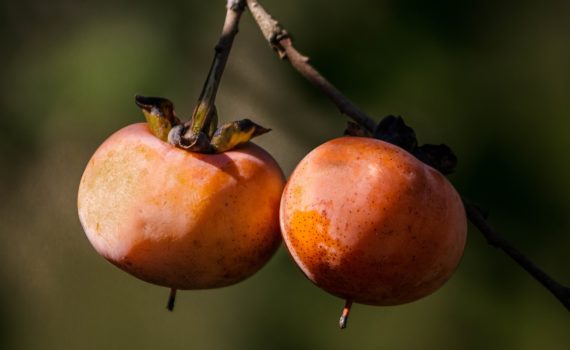
American persimmon is an eastern US native tree yielding sweet, frost-ripened fruit for processing. It is also valued for its hard wood.


American groundnut is a North American perennial vine. It yields edible tubers and beans, rich in protein, and is gaining interest as a sustainable food crop.