

Names Scientific Cinnamomum cassiaSynonym Cinnamomum aromaticumEnglish Chinese cassia Chinese cinnamonDutch KaneelSpanish CassiaFrench Cannelier casse Cannelier de Chine Cannelle de Cochinchine Casse Cassia Fausse cannelleGerman Cassiazimt ZimtkassieItalian Cassia Taxonomy Order LauralesFamily LauraceaeGenus CinnamomumSpecies Cinnamomum cassia (Chinese cinnamon) Crop categories Minor crops Spices Subtropical crops Tropical crops
Crops
676 posts
Names Scientific Cinnamomum loureiroiEnglish Saigon cinnamon Vietnamese cassia Vietnamese cinnamon Taxonomy Order LauralesFamily LauraceaeGenus CinnamomumSpecies Cinnamomum loureiroi (Vietnamese cinnamon) Crop categories Minor crops Spices Subtropical crops Tropical crops
Names Scientific Cinnamomum burmanniiEnglish Indonesian cinnamon Korintje Padang cassia Taxonomy Order LauralesFamily LauraceaeGenus CinnamomumSpecies Cinnamomum burmannii (Indonesian cinnamon) Crop categories Minor crops Spices Subtropical crops Tropical crops
Names Scientific Plectranthus rotundifoliusSynonym Solenostemon rotundifoliusEnglish Chinese potato Coleus potato Country potato Hausa potato Madagascar potato Native potatoSpanish Patata de los HausasFrench Pomme de terre d'Afrique Pomme de terre du Madagascar Pomme de terre du SoudanGerman Hausakartoffel Taxonomy Order LamialesFamily LamiaceaeGenus PlectranthusSpecies Plectranthus rotundifolius (Chinese potato) Basic information and facts Origin: Probably originates from Africa. Distribution: Various tropical countries in Africa and Asia. Kenya, Zambia, Zimbabwe, Madagascar, […]
Ethiopian mustard is a leaf vegetable.
Research is going on to use oil from this plant to develop bio-fuel for jet engines.
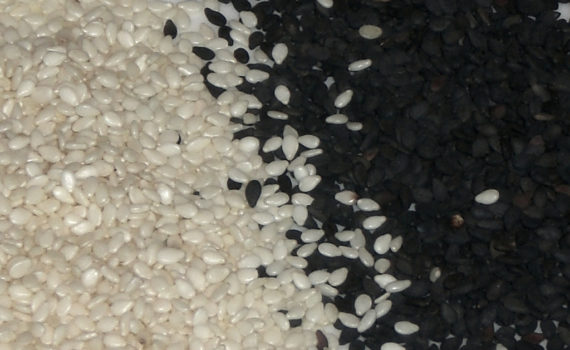
Sesame is one of the oldest oil crops in the world. The small seeds are often seen on the surface of breads, hamburger buns, cakes or cookies.
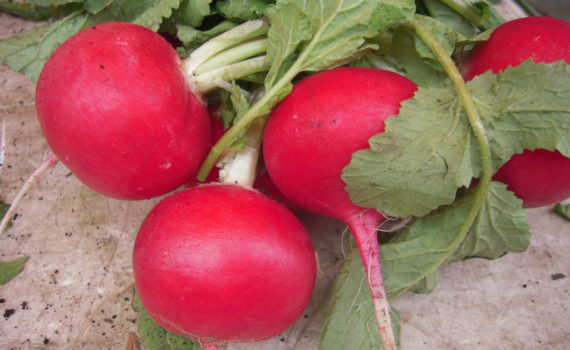
Radish is a root vegetable in the cabbage family. It has its origin in Europe, but is now grown all over the world. There are many different varieties, which differ in shape length, color and size.
The False mangosteen or Yellow mangosteen is related to the mangosteen. The yellow juicy fruits are edible and have an acid flavor.
Cowa is a rather unknown tropical fruit, related to the mangosteen. The slightly sour fruits are edible.

Cauliflower is closely related to cabbage, kale, broccoli and Brussels sprouts, which in fact belong to the same species. Cauliflower is one of the most popular vegetables.

The carrot originates from Afghanistan.
Carrots can be eaten raw (as a snack, or grated in salads) or they can be chopped and boiled, fried or steamed. Carrots are often used in soups and stews or they are used in baby foods.
Carrots are known for their high content of carotene (an orange pigment).

Capsicum is a genus of plants that includes several species of which the fruits are used as vegetables or spices. Some of these are hot peppers, while others are sweet peppers or bell peppers.

The species Capsicum annuum includes bell peppers (wich are not hot) and hot or vey hot chili peppers. Bell peppers are found worldwide in areas with tropical or warm climate. The fruits can be eaten raw (e.g. in salads) or cooked (e.g. in stir-fried dishes).

The fruits of the Bitter gourd (or Bitter melon) are eaten as a vegetable. As can be expected from the name, the bitter gourd has a very bitter taste.
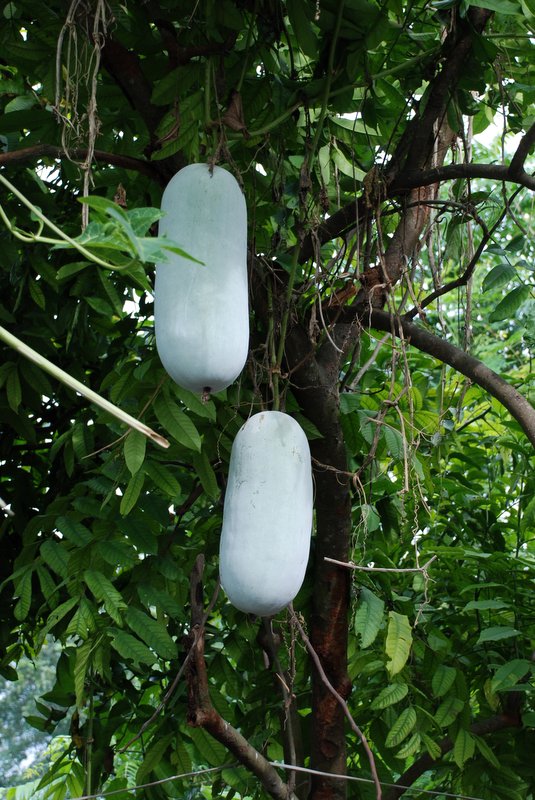
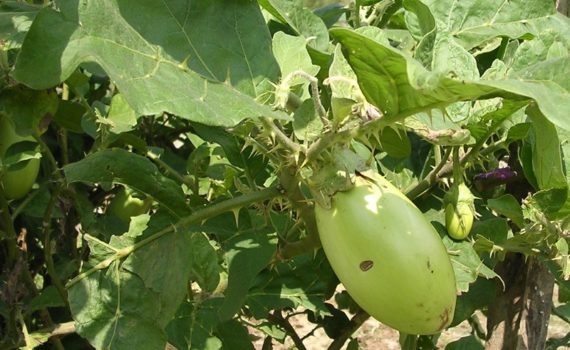
Eggplant (or Aubergine) is closely related to tomato, potato and chili peppers. Originally a tropical crop, it is now also sometimes grown in (heated) greenhouses in cooler climates.

The pods of the Vanilla orchid are used to produce "vanilla", a flavoring which can be used in ice cream, cookies and cakes.
This orchid originates from Central America. It can be grown in hot and wet tropical climates.

Star anise and anise have a similar flavor, but they are two very different and unrelated crops. Fruits of the star anise have of course a star shape.
Phalsa or Falsa is a small fruit tree grown for its sweet and sour acidic fruits. It is a tropical fruit, native to Southern Asia.
The Stone Pine, easily recognized by its umbrella-shaped canopy, is a distinctive tree native to the Mediterranean region. Valued for its edible pine nuts and its role in landscaping, this pine has been cultivated for millennia. Its unique appearance and practical uses make it a significant part of the Mediterranean landscape and culture.
Names Scientific Pinus sibiricaEnglish Siberian pineDutch Siberische denFrench Pin de SibGerman Sibirische Zirbelkiefer Taxonomy Order PinalesFamily PinaceaeGenus PinusSpecies Pinus sibirica (Siberian pine) Crop categories Cool temperate crops Edible seeds Minor crops
Names Scientific Pinus gerardianaEnglish Chilgoza pineDutch Chilgoza-den Taxonomy Order PinalesFamily PinaceaeGenus PinusSpecies Pinus gerardiana (Chilgoza pine) Crop categories Cool temperate crops High altitude crops Minor crops
Names Scientific Pinus koraiensisEnglish Korean pineDutch Koreaanse denSpanish Pino de CoreaFrench Pin blanc de CorGerman Korea-Kiefer Taxonomy Order PinalesFamily PinaceaeGenus PinusSpecies Pinus koraiensis (Korean pine) Crop categories Cool temperate crops Edible seeds Minor crops Temperate crops

Raspberries look a bit like blackberries, but when you pick them there is a clear difference; the raspberry separates from its core so that it looks like a hollow fruit.
The American oil palm is closely related to the African oil palm. Both are used to produce palm oil.
Longevity spinach is an edible vine which grows in Southeast Asia, China and Africa. The plant is collected from the wild but is also grown as a vegetable or as a medicinal plant.

Barley was one of the first cereals cultivated by man. It is one of the eight neolithic founder crops, which were plant species that were domesticated in the Fertile Crescent region by early farming communities.
Barley is still a very important cereal crop. Worldwide, it is the fourth important cereal crop (after maize, rice and wheat.
The Chameleon plant is native to Japan, Korea, southern China, and Southeast Asia. It is grown as a leaf vegetable or for use as a medicinal herb for its antiviral and antibacterial activities.

When farmers grow strawberries they will often cover the soil with straw to protect the fruits from rot. Maybe this is how the strawberry got its name.
The genus Fragaria includes several strawberries.

Dragon fruit (or pitaya) is the fruit of a cactus which blooms at night. Three species of dragonfruit share the same name, but have different fruits.
The fruits are usually eaten fresh. After peeling the fruit, the white or purple flesh, which has a mild sweet taste, is eaten. They can also be used to prepare juice or wine.
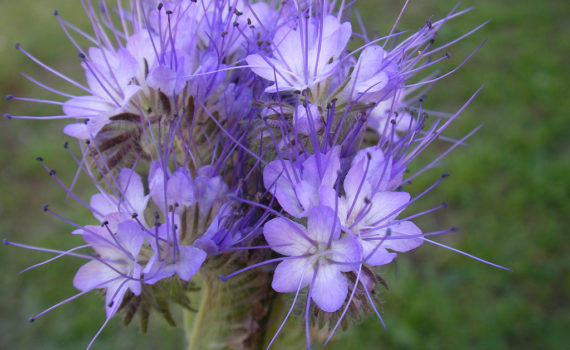
The Lacy Phacelia, also known as Bee's friend, is native to the Southwestern USA and Northern Mexico.
It is often grown as an ornamental plant but in agriculture it is used as a cover crop, a bee plant, and to attract other beneficial insects such as hoverflies (family Syrphidae).

Cloves are dried flower buds of a tree which originates from the Maluku islands in Indonesia. They are used all over the world, for example in beef stew. Cloves are often mixed with other spices (e.g. cinnamon, allspice). Clove oil is used to relieve toothache.

The nutmeg tree is cultivated for its fruits which are used for two different spices: nutmeg and mace. Nutmeg is the seed of the tree, while mace is the reddish aril, a lace-like covering of the seed.

Holy Basil or Tulsi is an aromatic plant which is used as a herb. A variety called Thai Holy Basil or Kaphrao, is often used in Thai cuisine, for example in 'phat kraphao' which is a stir-fried dish with beef, pork or chicken.
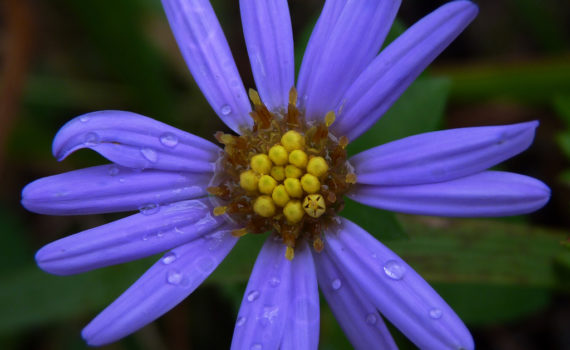
The genus Aster includes many species of which several are grown as ornamental plants. The name 'aster' has a Greek origin, meaning 'star'.
Pennyroyal is a perennial herb. It is cultivated only in small quantities and sometimes grown in gardens. The leaves have a strong smell which resembles that of spearmint.
The plant is sometimes used as a cooking herb. In small quantities, teas of Pennyroyal are used for medicinal purposes. Essential oil extracted from the plant (Pennyroyal oil) is very poisonous.

The dried stigmas of the flowers of the Saffron crocus are used as a spice and as a coloring agent in food, especially in Indian, Persian and European dishes. It is probably the most expensive spice in the world (by weight).


Black currant is a berry with a strong tart taste. It is often used in juices, soft drinks, jams and jellies, but can also be eaten raw as a dessert fruit, or in fruit salads.

Beetroot is a cultivated variety of the Beet. The red roots are eaten as a cooked vegetable or are used in salads.
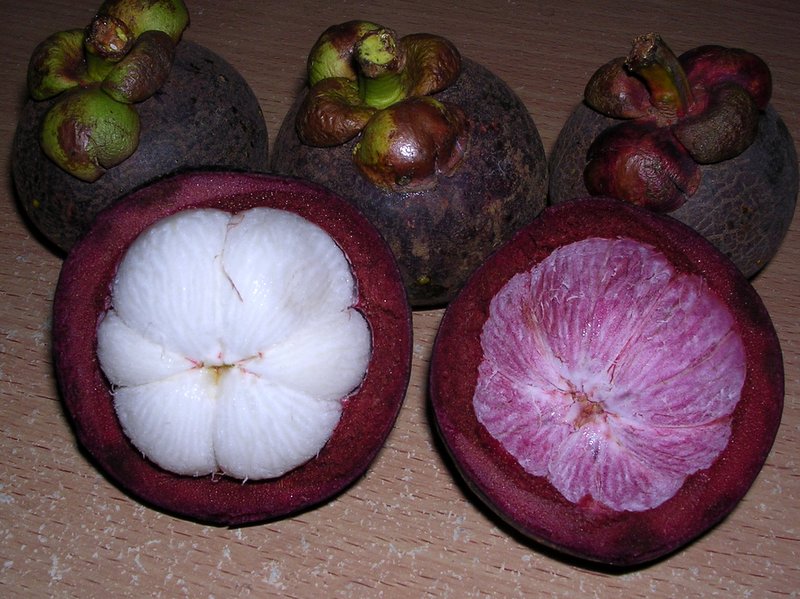
Mangosteen originates from the Sunda Islands and the Moluccas.
Mangosteen fruits are eaten fresh. After removing the skin, the bright white flesh can be eaten. It is one of the most tasty tropical fruits. Sometimes it is called the Queen of Fruits.

Lentil was one of the first pulses cultivated by man. It is one of the eight neolithic founder crops, which were plant species that were domesticated in the Fertile Crescent region by early farming communities.

Elephant foot yam probably originates from India or Sri Lanka. It is grown for the corms which are eaten as a vegetable..

Amaranthus or amaranth is a group of plants belonging to the genus Amaranthus.
Seeds of Amaranth can be eaten as a grain. In that case they are called pseudograins or pseudocereals. However, most Amaranth species are grown as leaf vegetables or as ornamental plants.
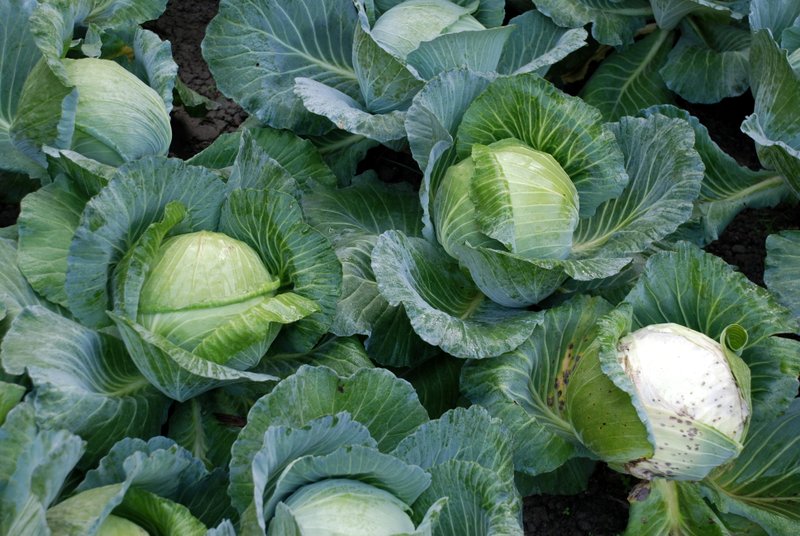
The cultivated cabbage is related to the wild mustard, which originates from the Mediterranean region. It grows best in temperate climates. Large producers of cabbage are China, India, Russia, Korea and Japan.
Cabbage can be eaten raw or cooked, and it is often used in soups and stews. It can also be pickled or fermented to make sauerkraut or kimchi.

Potato originates from the Andes region in South America. After the discovery of the Americas it was brought to Europe where it quickly became an important staple food.
The tubers of the potato plant are used as main staple food (energy supply) or as a vegetable.

Teasle gourd is a small egg shaped vegetable fruit, related to the bitter gourd and sometimes called ‘Small bittergourd’. It is found mainly in tropical Asia.

Yardlong bean is a type of cowpea. The name yard-long bean is well chosen because these beans are really long, although not exactly one yard. The French name "Haricot kilomètre" (kilometer bean) is even more exaggerating, but you get the idea.
Yard-long bean is grown throughout the tropics. It is common in Southeastern Asia (e.g. Thailand) and Southern China, Africa and South America.
Yard-long bean is used as a green vegetable, just like green beans. The pods can be eaten fresh or cooked in a variety of dishes.

Tomatoes originate from Central and South America and are closely related to eggplant, chili peppers, potato and tobacco.
Tomatoes are eaten fresh or cooked and are often processed, for example to make tomato ketchup.

Several vegetables and fruits have names that refer to human body parts, such as a "hand of bananas" and a "cabbage head". Another one is the okra, which is also called "Lady's finger".
Okra is related to roselle, cotton and jute, which all belong to the Mallow family. It is grown for its green fruits. When cooked they are rather slimy.